

The Real Cost of Manual Work in MSPs, and How Automation Saves Your Margins

Manual work has always been part of running a Managed Service Provider, but the cost of relying on human effort for repetitive and predictable tasks is growing harder to ignore. As client expectations rise, tickets stack up, staffing becomes more expensive, and margins tighten, many MSPs are recognising that the traditional approach simply doesn’t scale. Manual tasks don’t just slow you down, they introduce errors, inconsistency, and unnecessary operational drag.
Automation has emerged as one of the most effective ways for MSPs to protect profitability, improve service delivery, and create breathing space for their teams. Yet a surprising number of MSPs still underestimate the financial, operational, and human cost of doing everything by hand.
This article breaks down the true impact of manual work within an MSP and explores how automation helps stabilise and grow margins in a competitive market.
The Invisible Cost of Manual Repetition
Every MSP has tasks that get repeated dozens or even hundreds of times every week. Password resets, user onboarding, offboarding, application deployments, account changes, licence adjustments, and the constant back-and-forth of routine service desk tickets. Individually, each task may only take a few minutes, but multiplied across a month, the cost becomes substantial.
The financial impact goes beyond the time an engineer spends on the task. Manual tasks also create delays, interruptions, context switching, and operational bottlenecks. Even the simplest ticket draws an engineer’s attention away from more valuable work, such as project delivery, proactive maintenance, or higher-level troubleshooting.
When service desks are overwhelmed by repetitive work, client experience declines. Response times increase, SLA performance suffers, and customer satisfaction takes a hit. All of these eventually affect revenue and retention.
The Risk of Human Error
Manual work always carries the risk of mistakes. There’s nothing unusual about typing an incorrect username, missing a permission change, or overlooking part of an onboarding checklist. But in the world of MSPs, even small errors can have outsized consequences.
Incorrect onboarding can cause service delays. Poorly executed offboarding can create security risks. Misconfigured permissions can trigger compliance issues. A mistyped update can open the door to vulnerabilities.
Automation minimises these risks by ensuring tasks are carried out the same way every time, without shortcuts, variations, or forgotten steps.
How Manual Work Impacts Margins
Margins in the MSP industry are constantly pressured by rising salaries, licensing costs, and client demands. When engineers spend large portions of their day completing low-value manual work, the cost of delivering service increases. At the same time, the capacity for higher-value work decreases.
This creates a double impact:
- Service desk costs rise.
- Revenue-generating capacity is restricted.
For MSPs with limited staffing, this often results in engineers being stretched thin, operational performance suffering, and burnout becoming a serious risk.
Automation Reduces Cost and Protects Profitability
Automation directly improves margins by removing repetitive manual tasks from an engineer’s workload. When routine processes are automated, engineers gain time back to focus on strategic work, complex issues, and client projects.
MSPs that embrace automation typically see benefits such as:
- Reduced ticket volume
- Lower service delivery costs
- Faster ticket resolution
- Improved SLA performance
- Higher customer satisfaction
- Increased engineer capacity
- Stronger utilisation rates
Instead of paying skilled engineers to complete tasks that software can handle in seconds, automation reallocates human effort where it delivers meaningful business impact.
Beyond Efficiency: Automation Enhances Consistency and Quality
Automation ensures that processes are carried out exactly as intended, every time. This is particularly powerful for tasks involving:
- Onboarding
- Offboarding
- Licence updates
- Permissions
- Provisioning
- Routine monitoring responses
- Ticket categorisation and routing
Consistency leads to predictable outcomes, fewer follow-up tickets, and a smoother client experience. It also improves documentation accuracy and reduces the cognitive load placed on engineers.
Why Many MSPs Struggle to Start with Automation
Despite the clear advantages, many MSPs hesitate because:
- They lack the in-house skills.
- They fear the time required to build automations.
- They worry that automation platforms are too complex.
- They believe they can “get to it later” once things are quieter (they rarely do).
The reality is that MSPs struggling with resource constraints are the ones who benefit the most. Automation isn’t about replacing engineers; it’s about enabling them to perform at a higher level, without being buried in repetitive tasks.
How Your Automation Helps MSPs Automate Faster
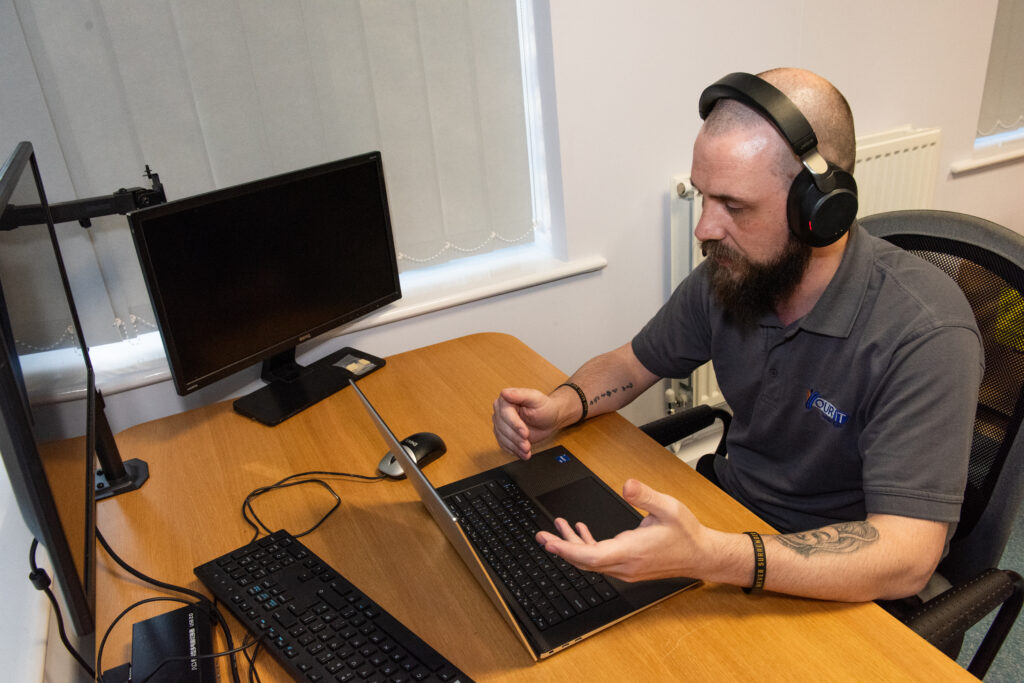
Your Automation exists to help MSPs adopt automation without needing to hire specialists or spend months learning a new platform. Built on the Rewst platform and backed by more than 15 years of MSP experience, Your Automation provides ready-to-use and custom automations designed to address real service desk pain points.
During onboarding, MSPs receive five pre-built automations that deliver immediate efficiency gains. The service continues with tailored automations that match each MSP’s workflows, processes, and stack, ensuring that automation integrates seamlessly into daily operations.
The Bottom Line
Manual work is expensive, slow, and prone to error. It restricts growth, drags operational performance down, and puts strain on your team. Automation gives MSPs the ability to scale efficiently, protect margins, and deliver a smoother client experience.
The MSPs that thrive over the next decade will be the ones who make automation a core part of their operating model. The cost of staying manual is simply too high.

